

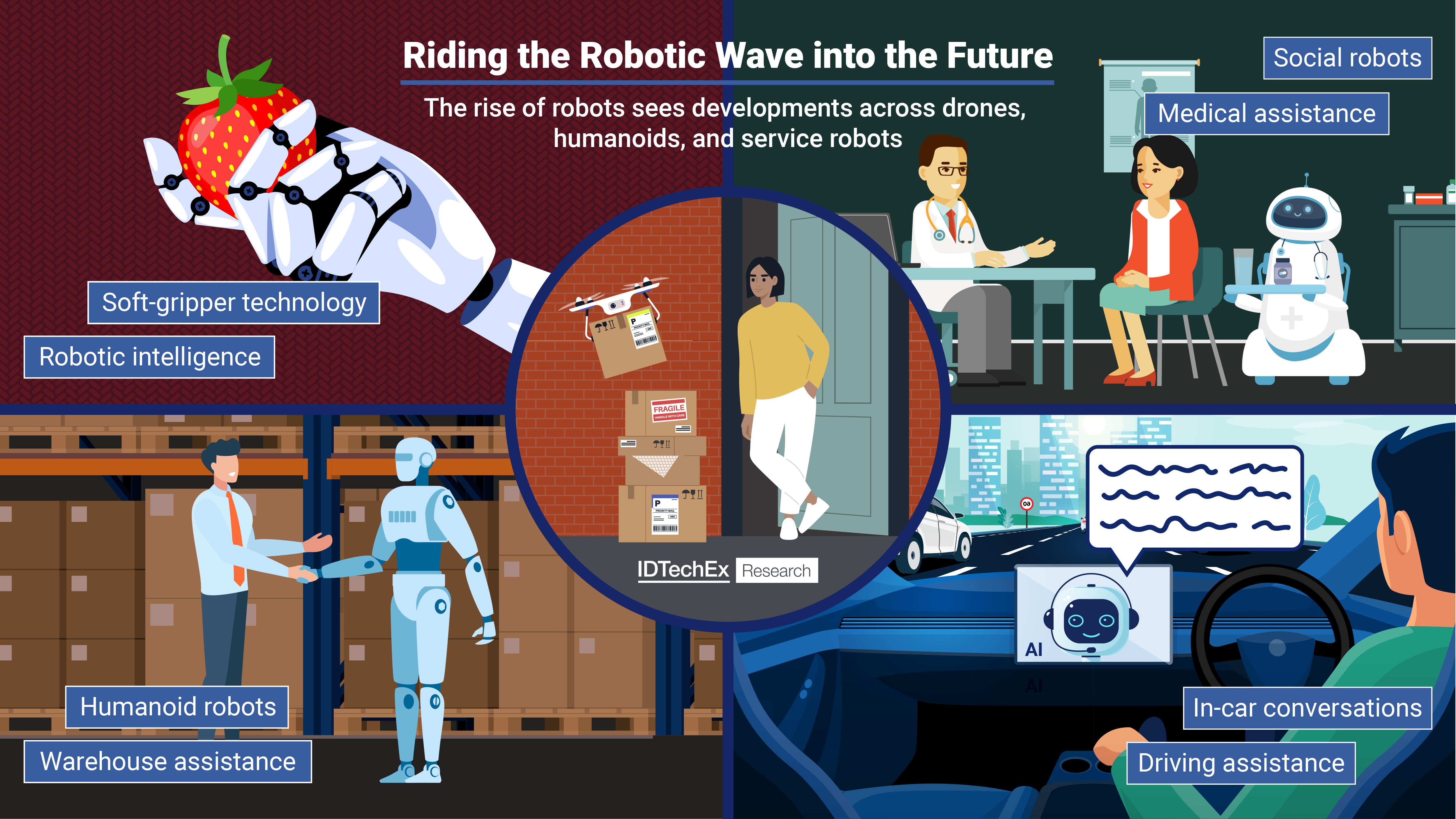
Robots take on a multitude of forms, each with technologies that make them best suited to their own specific environments, either working independently or in the company of humans. IDTechEx's portfolio of Robotics & Autonomy Research Reports and Subscriptions covers a wide spectrum of robotics that could see operation in a number of environments, from collaborative robots in supermarkets to drones outside the front door.
Source: IDTechEx.
Co-working cobots and conversational service robots
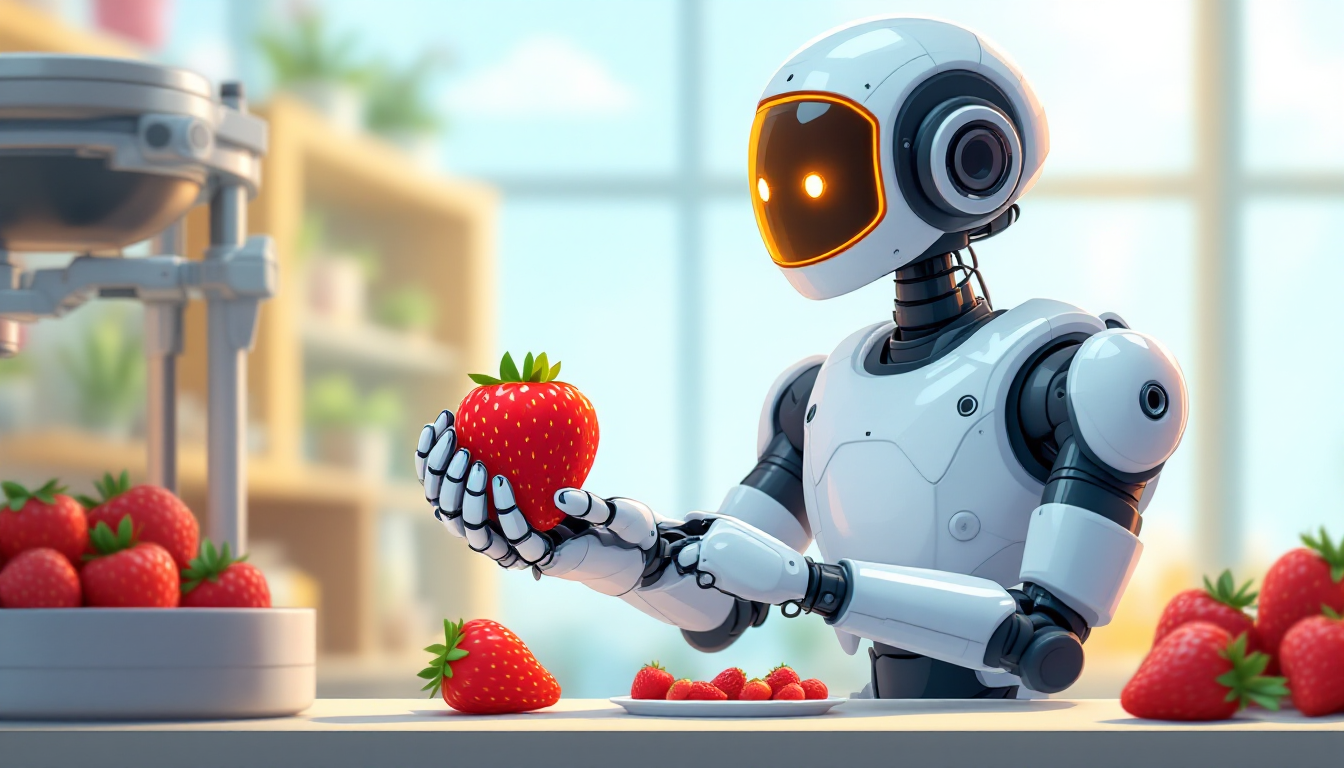
Collaborative robots (cobots) are increasingly being deployed in manufacturing, logistics, laboratories, and food handling applications, where they work safely alongside human operators. Their ease of programming, integrated safety features, and flexibility make them well suited for tasks such as machine tending, assembly, packaging, inspection, and material handling. As labor shortages continue to challenge many industries, cobots are becoming an attractive automation solution for businesses seeking higher productivity without the complexity of traditional industrial robot installations.
Unlike conventional industrial robots that often operate behind safety cages, cobots are designed to share workspaces with people. Lightweight structures, force sensing, vision systems, soft-gripper hand technology, and advanced safety controls enable them to respond dynamically to their surroundings and support human workers in collaborative environments. IDTechEx's report, "Collaborative Robots 2025-2045: Technologies, Players, and Markets", explores the key technologies, leading suppliers, deployment trends, and market opportunities shaping the future of collaborative robotics.
Source: IDTechEx.
Also working alongside humans but providing a different function entirely, service robots are deployed for companionship and social assistance. In restaurants, service robots are already deployed in some places to serve food and travel to and from the bar with drinks. They could also come in handy within homes, carrying out the cleaning or cooking simple meals for elderly people living alone, acting as a live-in helper.
The presence of service robots alone could prove to be a means of curbing loneliness, as with the integration of AI software, the robots could engage in real, human-like conversations. In medical and healthcare settings, it could therefore be imagined that service robots might provide support for patients in the form of a multifaceted helper, carrying out conversations and acting as a means of fetching snacks and drinks. IDTechEx's report, "Service Robots 2026-2036: Technologies, Players, and Markets", covers the different stages of their abilities, main application areas, and forecasts for their uptake.
Harnessing humanoid power
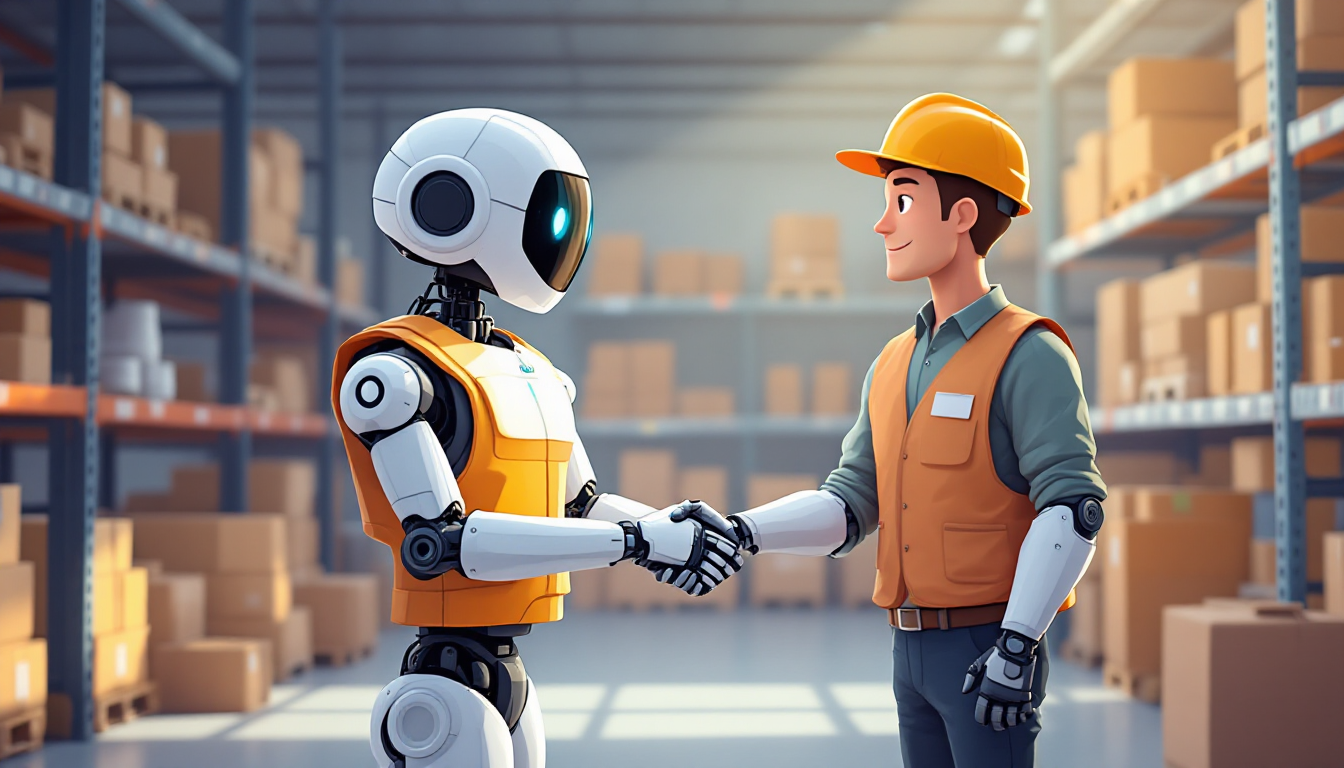
Coming in a slightly different, more human-like physical form, humanoid robots are being optimized for specific tasks, such as working in warehouses and automotive manufacturing lines and carrying out tasks like assembly and inspections.
Modular designs for humanoids are a trending topic expected to favor their uptake in the coming years, with bodies that can be easily fixed up and parts that are simple to replace. The choice of materials for humanoids is also a topic of discussion, as with more lightweight components, energy efficiency can be improved, to maximize their use and reduce power consumption. Similarly, high-capacity batteries and braking mechanisms will be crucial to ensuring energy efficiency and long working hours. IDTechEx's report, "Humanoid Robots 2026-2036: Technologies, Markets, and Opportunities", also describes vision as being a primary sensing form for humanoids, with tactile sensing on the rise to assist with dexterity and more complex interactive tasks.
Getting these factors right will be a huge step for humanoids, as proving their worthiness of investment and feasibility of deployment could generate increased confidence in the robots, and allow for them to come in use across more sectors and a wider range of tasks.
Source: IDTechEx.
Drones for delivery and AI assistants
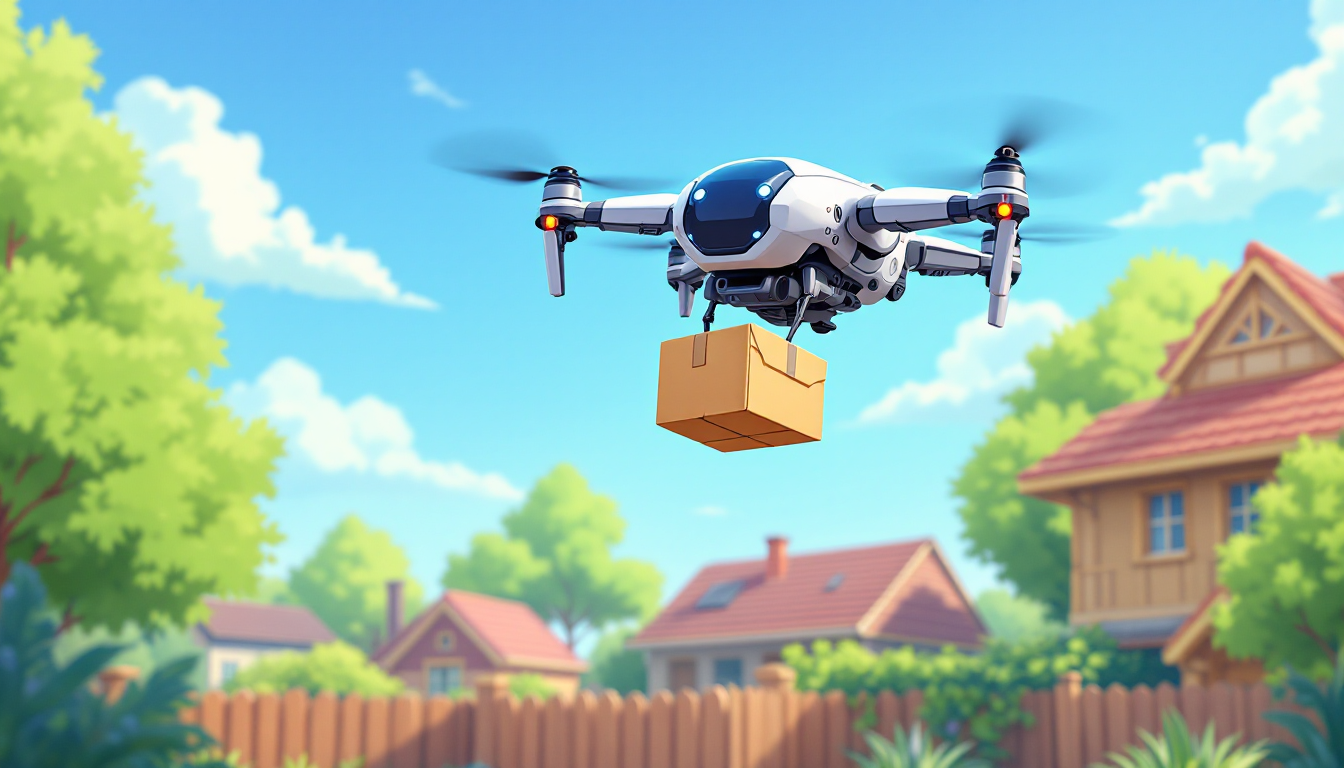
Drones dropping parcels outside people's front doors in busy cities and helping to take some of the weight off delivery companies could be a role for drones in the future. As online shopping and the demand for instant delivery ramps up, many postal services may struggle to continue keeping up with such high volumes of parcels, which is where drones could come in to provide efficient and timely last-mile delivery services. IDTechEx's report, "Drones Market 2026-2036: Technologies, Markets, and Opportunities", states that viable business models for last-mile logistics and medical deliveries are being built by leading companies across the US, Europe, and China, while for more remote routes, mid-range cargo drones are also being developed.
Source: IDTechEx.
Beyond physical robots, advances in artificial intelligence are transforming the in-vehicle experience. Modern automotive AI assistants are evolving from simple voice-control systems into intelligent software agents capable of understanding driver intent, monitoring vehicle conditions, and providing personalized support. Future systems may help drivers manage navigation, identify charging opportunities, schedule appointments, or proactively suggest actions based on real-time vehicle and user data.
As vehicles become increasingly connected and software-defined, AI assistants are expected to play a larger role in managing interactions between drivers, passengers, and vehicle functions. Combined with in-cabin sensing systems, these assistants may deliver more natural human-machine interactions while enhancing convenience, safety, and productivity during journeys. IDTechEx's report, "Autonomous Driving Software and AI in Automotive 2026-2046: Technologies, Markets, Players", examines the technologies, market drivers, and competitive landscape shaping the adoption of AI-enabled automotive software.
For more information on the world of robotics, visit IDTechEx's portfolio of Robotics & Autonomy Research Reports and Subscriptions for the latest diverse, ever-expanding research.
